

Lee Brown on Finding His Place in Tactical Strength
by NSCA
Other
March 2026
Today, he studies under-researched firefighter performance and publishes in the journal that first set his career in motion.
When the Field Became Real
Lee Brown, PhD, CSCS, CSPS, TSAC-F, RSCC, was 22 when he walked into the library during his first week of university, unsure where his future was headed. He’d come through a difficult period and didn’t have a clear plan.
Then he picked up the Journal of Strength and Conditioning Research (JSCR). “I went into the library… picked up a JSCR… and from that moment onwards my trajectory changed.”
At the time, he didn’t know what a strength and conditioning coach was. He was a Muay Thai fighter and played rugby, but he hadn’t realized the preparation itself was a profession.
After becoming certified during his undergraduate studies, he moved into coaching, working with rugby teams and Thai boxing for years. He later ran a boxing company for a decade, bought a gym, and worked with the British Army’s Parachute Regiment.
Over time, coaching raised questions about performance and physiology that he wanted to examine more closely. He became a lecturer and pursued those questions through research, completing a PhD by publication on Muay Thai physiology and striking performance.
He now mentors NSCA Members pursuing the PhD by Publication pathway — an alternative, accessible route based on peer-reviewed published work rather than a traditional thesis.
Closing a Tactical Research Gap
Dr. Brown is currently a Senior Lecturer at the University of East London, working across tactical and clinical populations. Firefighters are where his attention keeps returning.
“There’s hardly any published research. And female firefighters even more so. Eight percent of firefighters are female, and there’s absolutely nothing on menstrual cycle and menopause.”
Much of the available tactical literature leans heavily on military data. Dr. Brown focuses on the fire service, including training considerations for female firefighters in hot environments and the interaction between physiology and occupational stress.
His research collaborations now span both sides of the Atlantic, including projects with fire departments in London, Arlington, Miami-Dade, and Denver. Those partnerships have allowed him to study real-world firefighter demands rather than relying solely on proxy populations.
Why He Keeps Showing Up
Leadership within the NSCA has become a central part of Dr. Brown’s work. He serves as Chair of the Tactical Strength and Conditioning Professional Development Group (PDG) and the Sports Medicine Special Interest Group (SIG), among other volunteer roles. Through those groups, conversations have evolved into collaborative research.
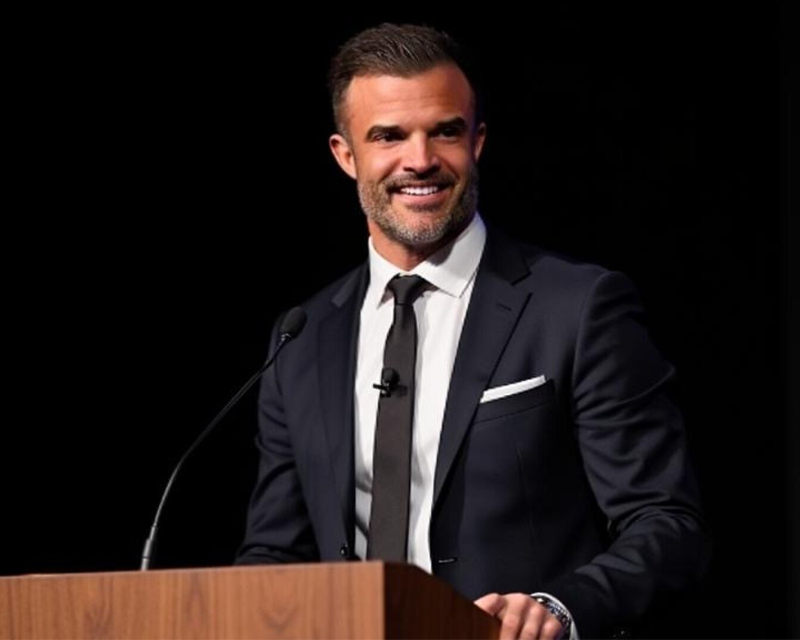
When people ask how to get involved, his advice is direct: “You just apply. Apply for everything, and you’ll probably get something. There is a place for everyone.”
Dr. Brown is also involved in the NSCA L.I.F.T. Mentorship Program, pairing experienced members with developing coaches. He describes it as recycling: coaches come in, grow, and eventually give back.
Making the trip from the UK to the NSCA National Conference has become routine, drawn back by the energy in the room. “You get to meet all these people, and everyone talks to you. You come back, and you’re in a bit of a low because you’re not there anymore. It was brilliant. It’s worth the trip.”
He’s also open about living with ADHD. In other professional environments, he says, it hasn’t always landed well. Within the NSCA, he’s found a place where his energy and directness fit. That sense of belonging keeps him contributing.
Years after pulling the JSCR off a library shelf, Dr. Brown now publishes in its pages — first with research on Muay Thai performance and more recently on jump assessments in the London Fire Brigade. He has also co-authored an article in the TSAC Report on firefighter coaching philosophy and communication, available for free.
From the Field: Lee’s Perspective
Q: What deserves more attention in tactical training?
A: “Perturbation-based balance training. Reactive balance. It’s all good, you can stand on one foot, you can do single-leg or closed-eye stuff, but you need external forces pushing on you to improve your proprioception. That’s what firefighters should do for injury risk reduction.”
Q: What exercise do you think gets overlooked?
A: “The Pendlay row is definitely the unsung hero of injury resilience or injury risk reduction. We talk about the deadlift and the squat, but it’s the position and the athleticism of the Pendlay row that doesn’t get used enough.”
Q: What’s your biggest takeaway across tactical, clinical, and performance settings?
A: “Muscle tendon unit imbalances. Your tendon should be as stiff as your muscles are strong. If your muscles are too strong and your tendon isn’t stiff enough, it’ll tear. Going up the stairs is largely isometric. Going down is reactive balance under fatigue and asymmetrical load.”
You just read an article from the NSCA’s Member Spotlight series. Your path might be exactly what another coach needs to see. Share your story with marketing@nsca.com.

- Privacy Policy
- Your Privacy Choices

- Terms of Use
- Retraction and Correction Policy
- © 2026 National Strength and Conditioning Association