

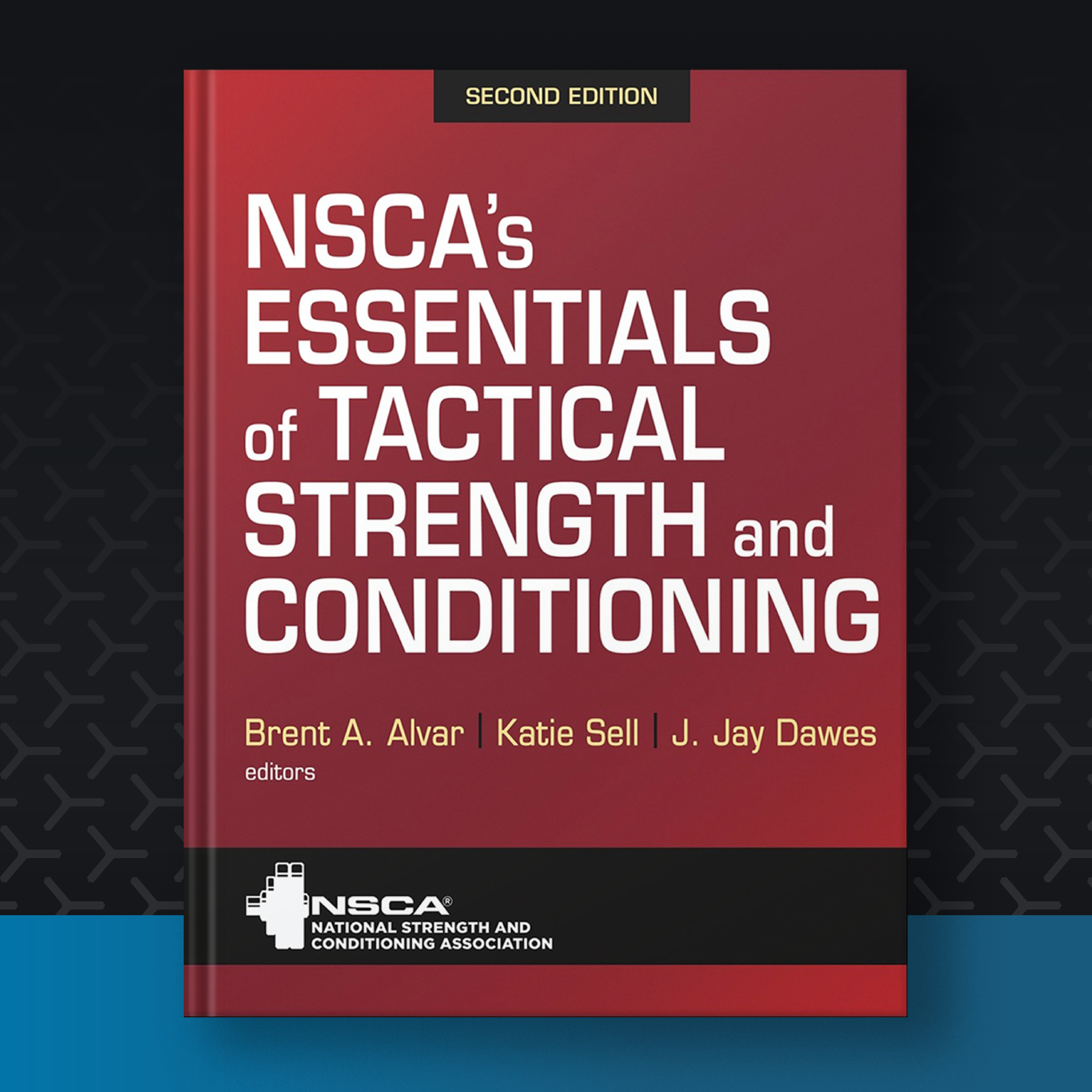
NSCA's Essentials of Tactical Strength and Conditioning, 2nd Edition
Editors
Brent A. Alvar, PhD, CSCS,*D, TSAC-F,*D, FNSCA
Brent A. Alvar is a Professor and Graduate Program Director in the Department of Kinesiology at Point Loma Nazarene University, where he also serves as the Associate Dean of Research, Grants, and Partnerships. A past president of the NSCA, his research focuses on resistance training dose response, exercise testing and prescription, human performance, and occupational preparedness.
Katie Sell, PhD, CSCS,*D, TSAC-F, ACSM EP-C
Katie Sell is a Professor in the Department of Allied Health and Kinesiology at Hofstra University, where she coordinates the undergraduate Exercise Physiology and Human Anatomy and Physiology programs. She is Editor-in-Chief of the NSCA TSAC Report, and her work includes consulting and research related to firefighter health, fitness assessment, physical fitness, and exercise programming.
J. Jay Dawes, PhD, CSCS, NSCA-CPT, TSAC-F, FNSCA
Jay Dawes is a Professor of Applied Exercise Science at Oklahoma State University and Co-Director of the university’s Tactical Fitness and Nutrition Lab. With more than 25 years of experience as a coach, educator, and performance professional, he supports law enforcement, fire, and military organizations through applied research focused on operational readiness, performance, and injury risk reduction.
Textbook Description
The Comprehensive Resource for Tactical Training
NSCA’s Essentials of Tactical Strength and Conditioning, Second Edition, provides a strong foundation for strength and conditioning professionals who train tactical personnel. These include individuals working in military, law enforcement, fire and rescue, and other public safety roles whose job tasks influence distinct training needs. Grounded in evidence-based principles and real field experience, the text reinforces the key knowledge that supports success in the tactical sector. It also serves as an in-depth reference for individuals preparing for the Tactical Strength and Conditioning Facilitator® (TSAC-F®) exam.
Updated for Today's Tactical Performance Demands
Current tactical environments place new pressure on performance, readiness, recovery, and long-term health. This second edition reflects developments in tactical training research and revised knowledge, skills, and abilities associated with TSAC-F certification. New content addresses overtraining risks and outcomes, lifestyle and occupational stress, tactical program-effectiveness metrics, and occupation-specific assessment protocols. Together, these updates give professionals a more current framework for training military, law enforcement, fire and rescue, and public safety personnel.
Gain Expertise to Strengthen Those Who Serve
Integrating real-world scenarios and sample programs, NSCA’s Essentials of Tactical Strength and Conditioning, Second Edition demonstrates how to translate scientific principles into effective decision-making across diverse tactical environments. Learning objectives, key terms, and detailed photographs clarify the physical and environmental factors that impact training. These tools help you design programming that supports readiness, resilience, and longevity across tactical teams. As your experience grows, this text remains a valuable resource for refining your approach and meeting the evolving demands of the field.
Purchase Second Edition
{{productInfo.DiscountDesc}} Valid thru {{new Date(productInfo.DiscountEndDate).toLocaleDateString('en-US')}}
Member Price: {{productInfo.MemberPrice}}
Member Price:
Non-Member Price: {{productInfo.ListPrice}} Non-Member Price:
As a member, you're saving {{productInfo.MemberSavings}} on this item!
Non-Member Price: {{productInfo.ListPrice}} Non-Member Price:Member Price: {{productInfo.MemberPrice}} Member Price:
Become a member and save {{productInfo.MemberSavings}} on this item!
Price: {{productInfo.PriceRange}} Price:Please log in to view your pricing.
This product is currently unavailable.
Table of Contents
-
Chapter 1. Tactical Strength and Conditioning Overview
Brent A. Alvar, PhD, CSCS,*D, TSAC-F,*D, FNSCA, Katie Sell, PhD, CSCS,*D, TSAC-F,*D, FNSCA, and J. Jay Dawes, PhD, CSCS, NSCA-CPT, TSAC-F, FNSCA
History of the NSCA’s Tactical Program
The TSAC Facilitator Job Task Analysis
Preparing for the TSAC-F Certification Exam
Prerequisites of the TSAC-F Certification Exam -
Chapter 2. Cardiopulmonary and Endocrine Systems
Tunde Szivak, PhD, CSCS, TSAC-F and Drew E. Gonzalez, PhD, CSCS, TSAC-F
Cardiovascular Structure and Function
Pulmonary Anatomy and Function
Acute Cardiovascular Responses to Exercise
Acute Respiratory Responses to Exercise
Endocrine System and Function
Acute Endocrine Responses to Exercise
Chronic Adaptations of the Cardiopulmonary and Endocrine Systems to Exercise -
Chapter 3. Skeletal, Muscular, and Neural Systems and Adaptations and Biomechanics
Jacob R. Goodin, PhD, CSCS, CPSS, and Brandon Roberts, PhD, MBA, CSCS,*D, TSAC-F,*D
Bone Anatomy
Muscle Anatomy
Muscle Mechanics
Neuromuscular Anatomy
Neural Responses During Exercise
Chronic Adaptations of the Skeletal, Muscular, and Neural Systems to Exercise
Detraining and Retraining
Biomechanical Principles -
Chapter 4. Bioenergetics and Overtraining and Recovery
Joel Martin, PhD, CSCS,*D, TSAC-F, CPSS
Bioenergetics
Overtraining
Recovery -
Chapter 5. Nutritional Guidelines and Fueling Strategies for Tactical Populations
Jillian Joyce, PhD, RD, Brittany Hollerbach, PhD, TSAC-F, and Justin Robinson, MA, RD, CSSD, CSCS, TSAC-F
Nutritional Scope of Practice
Step 1: Understand the Demands of the Tactical Athlete
Step 2: Understand Basic Fueling Concepts
Step 3: Provide Nutritional Guidance
Step 4: Create Nutritional Recommendations to Support Performance and Recovery Providing Guidance on Energy Balance and Nutrition Tools
Nutrition-Related Conditions of Tactical Athletes -
Chapter 6. Dietary Supplements and Ergogenic Aids
Abbie E. Smith-Ryan, PhD, CSCS,*D, FNSCA, FISSN, Michelle Arent, RD, MPH, CSCS, CISSN, and Kelsey Bailey, MS, RD, CSSD, CSCS
Regulation of Dietary Supplements
Anti-Doping Agencies and Dietary Supplement Resources
Common Performance-Enhancing Substances: Potential Benefits, Risks, and Side Effects Illegal Performance-Enhancing Substances
Signs and Symptoms of Ergogenic Aid Abuse -
Chapter 7. Assessment and Evaluation of Tactical Populations
Robert Lockie, PhD, TSAC-F, Joseph Dulla, MA, TSAC-F,*D, and Rachel Cassalia, PhD, CSCS,*D, TSAC-F,*D
History of Fitness Assessment in Tactical Occupations
Types of Assessments
Assessment Procedures
Interpretation of Assessment Performance
Use of Performance Assessment Results -
Chapter 8. Resistance Training Program Design
Nicholas A. Ratamess, PhD, CSCS, FNSCA
Perform a Needs Analysis Based on Job Requirements
Program Design Variables
Circuit and Metabolic Training
Importance of Progressive Overload, Specificity, and Variation -
Chapter 9. Periodization for Tactical Populations
Gregory Haff, PhD, CSCS,*D, FNSCA and Mark Stephenson, MS, ATC, CSCS,*D, TSAC-F,*D
Defining Periodization
Goals of Periodization
Principles of Periodization Models
Periodization, Planning, and Programming
Models of Periodization
Structural Components of Periodized Training
Sequencing and Integrating Training
Applying Periodization Theory to Deployment-Based Tactical Athletes
Applying Periodization Theory to Nondeployed Tactical Athletes -
Chapter 10. Flexibility and Mobility Exercise Techniques and Programming
Daniel J. Dodd, PhD, CSCS and Megan B. Thompson, PhD
Comparison of Flexibility and Mobility
Types of Flexibility and Mobility Exercises
Flexibility and Mobility Exercise Technique Guidelines
Flexibility and Mobility Programming -
Chapter 11. Resistance Training Exercise Techniques
Taylor Dinyer-McNeely, PhD, CSCS and James Prendergast, MS, CSCS
Warm-Up Before Resistance Training
Guidelines on Body and Limb Position, Breathing, and Spotting
In-the-Field Alternative Exercise Options
Exercise Regressions -
Chapter 12. Plyometric, Speed, and Agility Exercise Techniques and Programming
Jay Dawes, PhD, CSCS, NSCA-CPT, TSAC-F, FNSCA and Jeremy Robinson, PhD
General Considerations for Plyometric, Speed, and Agility Training
Plyometric Training
Plyometric Training Programming
Speed Training
Speed Training Programming
Agility Training
Agility Training Programming -
Chapter 13. Aerobic Endurance Exercise Techniques and Programming
Jeffrey I. Messer, PhD, MBA and Elisa F. D. Canetti, PhD
Preparing for Aerobic Endurance Training
Aerobic Endurance Exercise Technique
Aerobic Exercise Programming
Program Design Variables -
Chapter 14. Rehabilitation and Reconditioning of Injured Tactical Populations
Ben Schram, DPT, PhD, TSAC-F, CPSS and Marcie Fyock-Martin, DAT, ATC
Common Injury Prevalence and Risk Factors
Phases of Tissue Healing
Maintenance of Training Status During Rehabilitation and Reconditioning
Guidelines for Injury Care -
Chapter 15. Physiological Issues Related to Fire and Rescue Personnel
Mark Abel, PhD, CSCS,*D, TSAC-F,*D and Emily Langford, PhD, CSCS,*D
Critical Job Tasks
Environmental, Occupational, and Exposure Concerns
Injury and Illness Risks
Optimizing Functional Fitness
Key Program Considerations -
Chapter 16. Physiological Issues Related to Law Enforcement Personnel 491
Robin Orr, PhD, TSAC-F,*D, Robert Lockie, PhD, TSAC-F, and Sgt. Charlie Kornhauser
Critical Job Tasks
Environmental, Occupational, and Exposure Concerns
Injury and Illness Risks
Optimizing Functional Fitness
Key Program Considerations -
Chapter 17. Physiological Issues Related to Military Personnel
William Kraemer, PhD, CSCS,*D, FNSCA and Brian K. Schilling, PhD, CSCS, FNSCA
Critical Job Tasks
Environmental, Occupational, and Exposure Concerns
Injury and Illness Risks
Optimizing Functional Fitness
Key Program Considerations -
Chapter 18. Wellness Interventions in Tactical Populations
Bridget Melton, EdD, CSCS,*D, TSAC-F,*D, Kelly Kennedy, PhD, CSCS,*D, TSAC-F, CISSN, and Annette Zapp, MA, CSCS,*D, TSAC-F,*D, CISSN
Chronic Illnesses and Diseases Common in Tactical Populations
Risk Factors Requiring Wellness Interventions
Effect of Lifestyle and Occupational Stress on Wellness
Resiliency and Coping Skills
Effect of Physical Activity on Wellness
Operating Wellness Programs for Tactical Populations -
Chapter 19. Organization and Administration of Tactical Programs
Sgt. Charlie Kornhauser and John Hofman, Jr., MS, CSCS, TSAC-F, RSCC*D
Facility Design
Layout and Organization
Policies and Procedures
Safe Training Environment
Metrics to Show Program Effectiveness
Excerpts
Assessment Protocols for Military Personnel, Firefighters, and Police Officers
By Robert Lockie, PhD, TSAC-F, Joseph Dulla, MA, TSAC-F,*D, Rachel Cassalia, PhD, CSCS,*D, TSAC-F,*D, Maj. Bradley J. Warr, PhD, MPAS, CSCS, Patrick Gagnon, MS, Dennis E. Scofield, MEd, CSCS,*D, and Suzanne Jaenen, MS
Flexibility can be important for tactical personnel in certain job tasks, such as when conducting searches (e.g., in cells, vehicles, rooms in houses) (43) and for manual handling (10). Hamstring flexibility has been found to decrease overuse injuries in military trainees (37), so this could also influence injury occurrence in other tactical personnel...
Read More
Developing Predeployment Training for Tactical Athletes
By G. Gregory Haff, PhD, CSCS,*D, FNSCA and Mark Stephenson, MS, ATC, CSCS,*D, TSAC-F,*D
The construction of the predeployment period should be individualized to the tactical athlete or unit. However, a sample mesocycle model is shown in figures 9.17 through 9.19, which depict a series of mesocycles that vertically integrate and horizontally sequence training factors that are of particular interest to the tactical athlete...
Read More
Sample Training Program for a Ranger Unit
By William J. Kraemer, PhD, CSCS,*D, FNSCA and Brian K. Schilling, PhD, CSCS, FNSCA
No one-size-fits-all strength and conditioning program exists that will be appropriate for all service members. As mentioned, optimal programming must address the physical requirements of the military personnel’s occupational specialty and the unit’s mission, and it must factor in constraints such as competing military training requirements that must be prioritized in a given training cycle…
Read More
Understand the Risks of Overtraining Syndrome
By Joel Martin, PhD, CSCS and Todd Miller, PhD, CSCS,*D, TSAC-F, FNSCA
Exercise programs that incorporate high training volumes or high training intensities, especially those focused on single training modalities without variation, can increase the risk of OTS. The cumulative effect of intense physical training combined with other stressors such as inadequate nutrition, lack of sleep, and psychological stress contributes to the development of OTS…
Read More

- Privacy Policy
- Your Privacy Choices

- Terms of Use
- Retraction and Correction Policy
- © 2026 National Strength and Conditioning Association